Battery: breakdown recovery

<?xml version="1.0" standalone="yes"?>

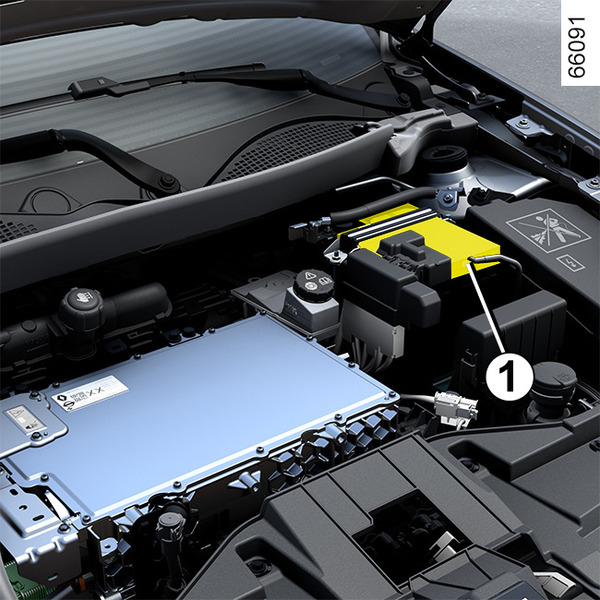
To avoid all risk of sparks:

  • Ensure that the "energy consumers" (ceiling lights, etc.) are switched off before disconnecting or reconnecting a battery.
  • When charging, stop the charger before connecting or disconnecting the battery.
  • Do not place metal objects on the battery as this could create a short circuit between the terminals.
  • Always wait at least one minute after the engine has been switched off before disconnecting a battery.
  • Make sure that you reconnect the battery terminals

Chapter

Towing: breakdown

<?xml version="1.0" standalone="yes"?>

Before all towing operations, set the gearbox to N position (refer to "Automatic gearbox" in Section 2), unlock the steering column, then release the parking brake (refer to "Electronic parking brake" in Section 2).

If the gearbox cannot be set to N position, please contact an authorised dealer.

Chapter

Changing a wheel

<?xml version="1.0" standalone="yes"?>

Vehicles equipped with a jack and wheel brace

For vehicles equipped with such, remove the wheel bolt covers using the pliers stored in the inflation kit casing.

Unlock the wheel bolts using the wheel brace 1. Position it so as to be able to push from above.

Crank up the jack 2 by hand to position the jack head against the jacking point closest to the wheel concerned and marked by an arrow 3.

Chapter

Puncture, emergency spare wheel

<?xml version="1.0" standalone="yes"?>

In case of puncture

Depending on the vehicle, either a tyre inflation kit or an emergency spare wheel is provided.

Vehicle fitted with a tyre pressure monitoring system

Chapter

Tools

<?xml version="1.0" standalone="yes"?>

The presence of the tools depends on the vehicle.

The emergency spare wheel storage case located on the passenger seat contains a bag containing the following tools:

Jack 1

Chapter

Tyre inflation kit

<?xml version="1.0" standalone="yes"?>

warning

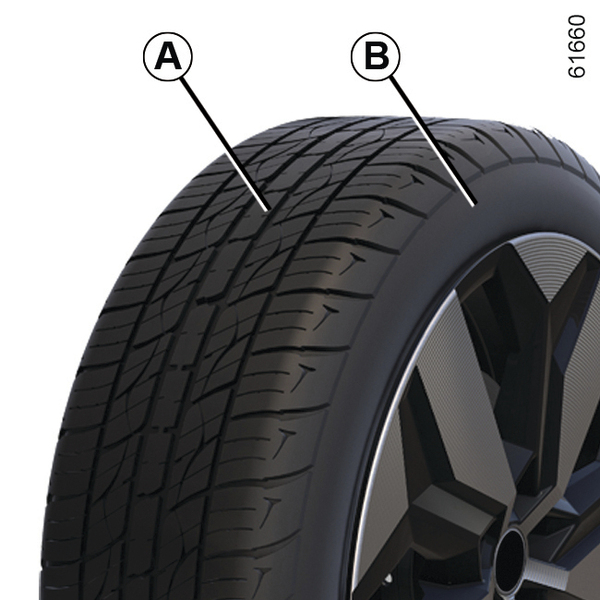
The kit repairs tyres when the tread A has been damaged by objects smaller than 4 mm. It cannot repair all types of puncture, such as cuts larger than 4 mm, cuts in the tyre sidewall B, etc.

Chapter

Tyre pressure

<?xml version="1.0" standalone="yes"?>

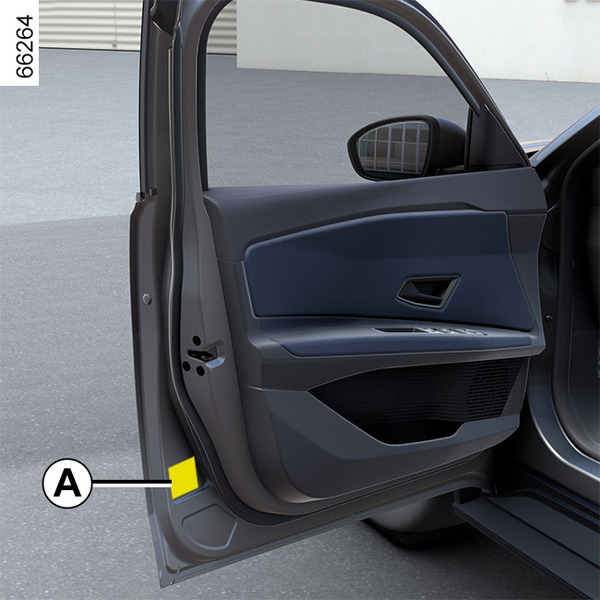
Label A

Open the driver’s door to read it. Label A is located on the edge of the door, or depending on the vehicle, at the bottom of the door.

Tyre pressures should be checked when the tyres are cold.

Chapter