A390
Rear-facing child seats
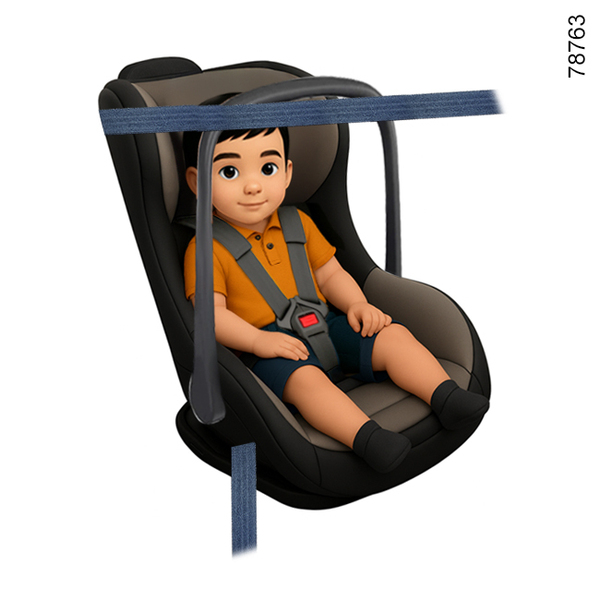
A baby’s head is, proportionally, heavier than that of an adult and its neck is very fragile. Transport the child in this position as long as possible (until the age of 2 at the very least). It supports both the head and the neck.
Choose a bucket type seat for better side protection and change it as soon as the child’s head is higher than the shell.
Forward-facing child seats
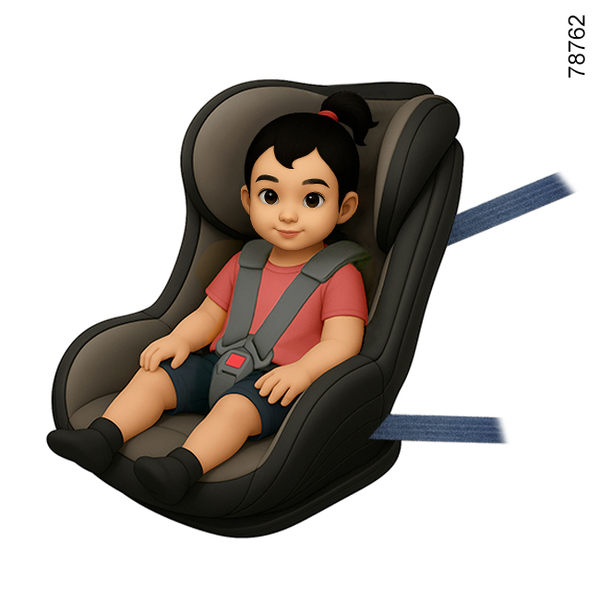
Up to 18 kg or 4 years, the child may travel on a forward-facing seat. Choose a seat according to the size of the child: the child’s head and abdomen need to be protected as a priority. A forward-facing child seat which is firmly attached to the vehicle will reduce the risk of impact to the head. Ensure your child travels in a forward-facing seat with a harness for as long as their size permits.
Choose a bucket type seat for optimum side protection.w
Booster cushions
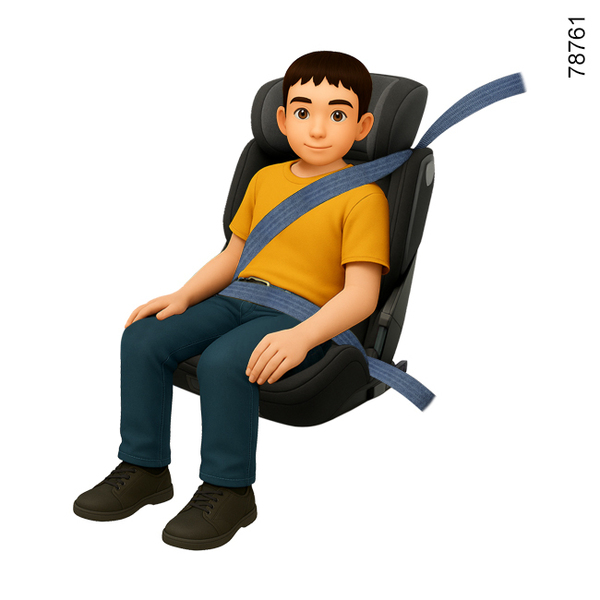
From 15 kg or 4 years, the child can travel using a booster seat, which will enable the seat belt to be adapted to suit his size and shape. The booster seat cushion must be fitted with guides to position the seat belt on the child’s thighs rather than the stomach. It is recommended that you use a seatback which can be adjusted in terms of height and is equipped with a belt guide to position the seat belt in the centre of the shoulder. It must never rest on the neck or on the arm.
Choose a bucket type seat for optimum side protection.w
List of recommended restraint devices for children
| Age | Size | Weight | Recommended child safety seat* |
|---|---|---|---|
| 0-4 years | 40-105 cm | 0-17.5 kg | Maxi Cosi Pearl 360 + Familyfix 360 Base |
| 0-19 kg | Joie i-Spin 360 | ||
| 3.5-12 years | 100-150 cm | 15-36 kg | Britax Römer KIDFIX PRO M* |
*For more information and to see seat availability, please refer to the manufacturer's website.
The child restraint device must be fitted and used in accordance with the instructions provided by the manufacturer.
Use the ISOFIX fasteners whenever the available space allows it.